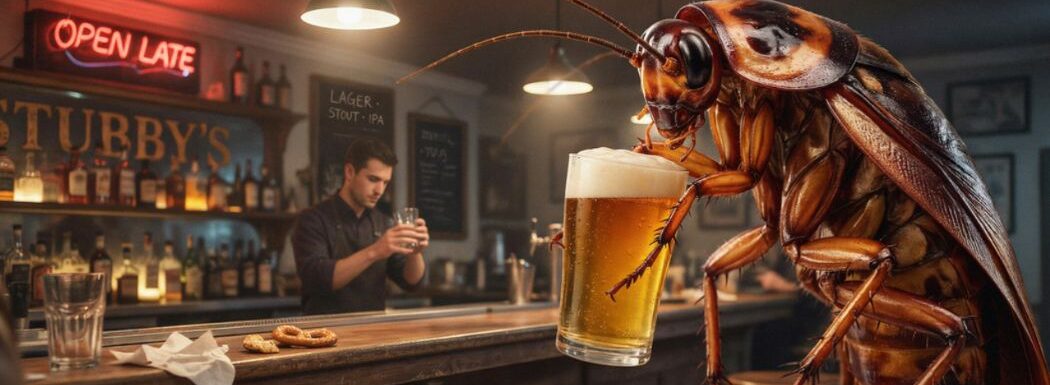
In this solo Brainfluence episode, Roger Dooley argues that the strangest-looking experiments in behavioral science are usually the most useful ones. He opens in 1969, when psychologist Robert Zajonc put 72 cockroaches through mazes in front of an audience of other cockroaches. That setup wasn’t a joke. It was a precise piece of engineering: strip out self-consciousness, and you can finally see whether an audience by itself changes performance.
The organizing idea comes from Dan Ariely, who describes a good experiment as a painting rather than a photograph. You don’t reproduce every detail of the real-world problem. You capture its essence and build a tiny world containing that and almost nothing else. Roger walks through four studies built exactly that way: a swaying suspension bridge two hundred thirty feet above a canyon, a beer menu at a Chapel Hill brewery, a pile of Lego Bionicles, and an energy drink sold at two different prices. Each one carries a direct lesson for marketers and managers, from why people can’t tell you why they bought something to why discounting can make a product objectively worse.
The episode closes with four rules that separate experiments which transfer from experiments that produce a one-time winner, and a twist: fifty years on, someone re-ran the cockroach study, and only half of it survived.
Listen or Watch
Podcast: Play in new window | Download
VIDEO:
Weird Behavioral Science Experiments – Key Moments
00:00 – The 1969 Cockroach Experiment That Sounds Like a Joke Robert Zajonc recruited 72 cockroaches, sat them in front of an audience of fellow roaches, and timed them through an easy runway and a difficult maze.
01:31 – Social Facilitation: What Zajonc Was Actually Testing The real question was whether being watched changes performance, and why testing that on humans muddies the answer.
02:39 – Dan Ariely’s Frame: An Experiment Is a Painting, Not a Photograph Start with a real-world problem, boil it to a single principle, build a tiny self-contained world around that principle, then mess with it.
03:43 – “I’m More of a Behavioral Hacker” Ariely’s own description of his method, and why so much good research needs little more than paper, a pencil, and a few grad students.
04:12 – The Capilano Bridge Study: Fear, Attraction, and a Phone Number Dutton and Aron stationed an attractive woman at the end of a terrifying suspension bridge and a safe one, then counted who called.
05:02 – Misattribution of Arousal, and Why Nobody Asked the Men How They Felt Your brain notices a pounding heart and reaches for an explanation, not always the right one, and self-report would have been worthless here.
05:36 – The Criticisms, and What the Replications Actually Show Fifty years of methodological objections, plus what studies using roller coasters and horror movies confirmed.
06:40 – The Beer Study: What Happens When You Order Out Loud Ariely and Jonathan Levav let some tables order beer aloud and others write their picks privately, with very different results.
07:30 – When a Private Preference Becomes a Public Performance Swap the brewery table for a boardroom, a Zoom call, or a car dealership and the same distortion appears.
08:19 – Legos, Bionicles, and the Sisyphus Condition Same task, same pay, one difference: watching the experimenter tear apart the model you just built.
09:43 – Dismantling Your Team’s Bionicles The reorg, the report nobody read, the project cancelled the week before launch, and why the best people break first.
10:41 – The Energy Drink That Worked Better at Full Price Shiv, Carmon, and Ariely sold the same drink at two prices, then measured how many word puzzles people could solve.
11:50 – The Hidden Risk in Every Discount and Coupon Cutting the price may not just trim your margin. It may degrade the experience your customer actually has.
12:38 – Four Rules for Experiments That Actually Transfer Specify the principle before the variable, exaggerate the manipulation, remove everything that isn’t the essence, then flip the essence and see if the behavior flips.
13:45 – The Twist: Rerunning the Roaches 50 Years Later A 2020 preregistered replication held up one half of Zajonc’s famous result and knocked out the other.
15:01 – The Takeaway: State the Essence in One Sentence If nobody on your team can do it, you don’t have an experiment yet.
Weird Behavioral Science Experiments – Quotes
— Roger Dooley [00:06:03 → 00:06:24]
— Roger Dooley [00:06:24 → 00:06:40]
— Roger Dooley [00:07:41 → 00:08:01]
— Roger Dooley [00:10:00 → 00:10:13]
— Roger Dooley [00:11:19 → 00:11:34]
— Roger Dooley [00:11:50 → 00:12:07]
— Roger Dooley [00:15:17 → 00:15:29]
Weird Behavioral Science Experiments Resources
Dan Ariely on how he designs experiments – “On Experiments”
Brainfluence with Dan Ariely – Real World Behavioral Science with Dan Ariely
Brainfluence with Dan Ariely – Dan Ariely on Motivation
Neuromarketing – The Beer Study and What It Means for Marketers
Video – Why the Same Wine Tastes Better at a Higher Price
Studies referenced in this episode:
- Zajonc, R. B., Heingartner, A., & Herman, E. M. (1969). Social enhancement and impairment of performance in the cockroach. Journal of Personality and Social Psychology, 13, 83–92.
- Halfmann, E., Bredehöft, J., & Häusser, J. A. (2020). Replicating Roaches: A Preregistered Direct Replication of Zajonc, Heingartner, and Herman’s (1969) Social-Facilitation Study. Psychological Science. Link
- Dutton, D. G., & Aron, A. P. (1974). Some evidence for heightened sexual attraction under conditions of high anxiety. Journal of Personality and Social Psychology, 30(4), 510–517. Link
- Ariely, D., & Levav, J. (2000). Sequential choice in group settings: Taking the road less traveled and less enjoyed. Journal of Consumer Research, 27(3), 279–290. Link
- Ariely, D., Kamenica, E., & Prelec, D. (2008). Man’s search for meaning: The case of Legos. Journal of Economic Behavior & Organization, 67(3–4), 671–677. PDF
- Shiv, B., Carmon, Z., & Ariely, D. (2005). Placebo effects of marketing actions: Consumers may get what they pay for. Journal of Marketing Research, 42(4), 383–393. PDF
If you like Brainfluence…
- Never miss an episode by subscribing via iTunes, Stitcher or by RSS
- Help improve the show by leaving a Rating & Review in iTunes (Here’s How)
- Join the discussion for this episode in the comments section below
About Roger Dooley
Roger Dooley is an internationally recognized author and keynote speaker on neuromarketing, behavioral science, customer experience and loyalty. His book The Persuasion Engine (Wiley, 2026) reveals how AI democratizes behavioral science tools once exclusive to Fortune 500 companies. Author of Friction (named a Top 3 Management Book by PwC’s strategy+business) and Brainfluence (11 languages), Roger combines entrepreneurial experience – he co-founded and sold College Confidential to the UK’s Daily Mail Group – with behavioral science expertise to deliver immediately actionable strategies. A Forbes contributor and Brainfluence podcast host, Roger shows organizations of any size how to leverage behavioral insights and AI to compete effectively.
Full Transcript:
Full Episode Transcript PDF: Click HERE
Roger Dooley [00:00:00]:
Welcome to Brainfluence. I’m Roger Dooley. A quick reminder for our audio listeners, all episodes, plus many more Brainfluence Briefs are available on my YouTube channel. Way back in 1969, a psychologist named Robert Zajonc recruited 72 cockroaches and had them run mazes.
Roger Dooley [00:00:18]:
They ran in front of an audience. Here’s the weird part. The audience wasn’t lab assistants or undergrad psych majors earning credit. It was other cockroaches. The watcher bugs were sealed in little clear plastic boxes right next to the track. The paper doesn’t tell us whether or not they cheered.
Roger Dooley [00:00:35]:
Some roach runners got an easy job: run straight down a path to get away from a bright light. Others got a harder job, a maze with twists and turns. And with that audience of fellow roaches watching, Zajonc observed something strange. The roaches got faster on the easy path and slower on the difficult maze.
Roger Dooley [00:00:54]:
By now you’re probably wondering, who cares how fast a cockroach runs? I guess some people do. Anecdotally, I can tell you that New York City roaches scatter three times faster than their laid-back Texas relatives. But this experiment was never about cockroach athletic performance.
Roger Dooley [00:01:10]:
And by the end of this episode, you’ll see why the strangest-looking, most bizarre experiments in behavioral science are usually the best ones and how the thinking behind them can transform the way your team runs your marketing experiments.
Roger Dooley [00:01:31]:
So what was Zajonc actually studying? It was something called social facilitation, the question of whether being watched changes performance. Here’s the design problem. If you test that on humans, things get complicated. People care what the audience thinks. They get self-conscious.
Roger Dooley [00:01:47]:
They show off, or maybe they choke. It’s hard to separate whether the presence of others changes performance or worrying about others. A cockroach solves that problem. It can sense that other roaches are nearby but it almost certainly doesn’t care what they think of its lap time.
Roger Dooley [00:02:03]:
If you remove self-consciousness, and if the audience still changes performance, you’ve isolated something real about the mechanism. That’s not a silly experiment. That’s a very precise one that happens to look silly. Remember this study because there’s a twist coming at the end of the episode.
Roger Dooley [00:02:19]:
Fifty years later, someone re-ran it and the story changed. I’ll get to that in a little bit. First, let me give you the frame that ties this whole episode together. It comes from Dan Ariely, who I’ve had on this show a couple of times. He recently wrote a short piece about how he comes up with his experiments, and I really like his analogy.
Roger Dooley [00:02:39]:
An experiment is a painting, not a photograph. A painter usually doesn’t try to reproduce every detail of a scene. They capture the essence of it. A good experiment works the same way. You start with a real-world problem. People don’t save enough for retirement.
Roger Dooley [00:02:55]:
People quit taking their medication. People abandon projects halfway through. Then you boil that problem down to a single principle. Next, you build a tiny self-contained world that includes that principle and almost nothing else. Finally, you mess with it and watch what happens.
Roger Dooley [00:03:11]:
The question a good researcher is really asking is actually quite simple. What’s the essence of this problem? That explains why so much behavioral research looks, frankly, a little crazy from the outside. The weirdness isn’t sloppiness or weirdness for its own sake.
Roger Dooley [00:03:27]:
It’s what’s left after you strip away everything that isn’t the essence. When I interviewed Ariely years ago, I teased him about this. Other researchers need multimillion-dollar brain scanners. Dan often seems to need little more than paper, a pencil, and a few grad students.
Roger Dooley [00:03:43]:
His answer stuck with me. He said, “I’m not really a good scientist. I’m more of a behavioral hacker.” He starts with something in the real world that isn’t working, and asks how you could poke at it, even imperfectly, to understand it better. Keep that phrase in mind — behavioral hacker — because I’m going to walk you through four experiments that sound like pranks and turn out to be very useful findings in behavioral science: a scary bridge, a beer menu, a pile of Legos, and an overpriced energy drink.
Roger Dooley [00:04:12]:
Let’s start with the bridge. British Columbia, 1974. The Capilano Canyon has two ways across. One is a narrow suspension bridge — wobbly, swaying, two hundred thirty feet above rocks and rapids. The other is a solid wooden bridge crossing a calm stream just ten feet down.
Roger Dooley [00:04:30]:
Researchers Donald Dutton and Arthur Aron stationed an attractive woman at the end of each bridge. As men came across, she asked them to write a short story about an ambiguous picture, and then gave each one her phone number, supposedly in case he had questions about the study. Here’s what happened.
Roger Dooley [00:04:49]:
Of the men who crossed the terrifying bridge, half called her. From the safe bridge, only two out of sixteen. And the stories written by the scary-bridge men contained noticeably more romantic and sexual imagery.
Roger Dooley [00:05:02]:
Now, was this a study about bridges? Of course not. The essence being tested was something called misattribution of arousal. When you’re frightened, your body changes. Your heart pounds, your palms sweat. Your brain notices these changes and looks for an explanation.
Roger Dooley [00:05:18]:
And it doesn’t always pick the right one. It picks the most interesting one available. And on that bridge, the most interesting explanation in sight was an attractive stranger. The bridge was never the point. It was just a cheap, reliable way to spike a man’s heart rate that had nothing to do with romance.
Roger Dooley [00:05:36]:
Now, full disclosure, the methodology of this study has been criticized for fifty years. Men weren’t randomly assigned to bridges, and you could argue that cautious guys who chose the safe crossing might also be more reluctant to cold call a woman. The sample size was tiny.
Roger Dooley [00:05:52]:
But here’s the good news. Replications using roller coasters and horror movies confirm the arousal-attraction transfer is real. It’s just more modest and shorter-lived than originally thought.
Roger Dooley [00:06:03]:
And notice one more piece of elegant design. Why not just ask the men how attracted they felt? Because that answer would be worthless. If you’ve followed my work for any length of time, you know this is one of the foundational truths of neuromarketing. People can’t or won’t reliably tell you why they did what they did, explain how they feel, or predict what they will do in the future.
Roger Dooley [00:06:24]:
The scientists didn’t need a questionnaire. They only needed a phone number and a count of who called. This raises a fun question. If people can’t explain their own behavior, what happens when you make them announce their choices out loud in public? That question brings us to the beer.
Roger Dooley [00:06:40]:
This one is Ariely’s own favorite, and it’s one with a direct payoff for marketers. He and Jonathan Levav ran it at the Carolina Brewery in Chapel Hill. Tables of diners were offered a free sample from a menu of four beers. At some tables, everyone ordered the normal way, out loud, one after another, while the rest of the table listened.
Roger Dooley [00:06:59]:
At other tables, everyone wrote their choice privately on a card. The tables ordering out loud chose significantly more variety. Nobody, it seems, wants to be the fourth person at the table to say, “I’ll have the same thing.” But here’s the twist, and this is the part I love.
Roger Dooley [00:07:15]:
The people who ordered out loud enjoyed their beer less. All that variety-seeking produced regret. And the happiest drinker at the table in those groups was the person who ordered first, the only one who chose without hearing anyone else’s pick.
Roger Dooley [00:07:30]:
The essence here isn’t beer. It’s what happens when a private preference becomes part of a public performance. People stop choosing what they want and start choosing what their choice says about them.
Roger Dooley [00:07:41]:
Now, swap out the brewery table. Make it a boardroom where opinions are given in order of seniority. A Zoom call where the boss weighs in first. A couple choosing options at a car dealership while watching each other’s reactions. The same distortion kicks in. The later you speak, the less your stated preference reflects your actual preference.
Roger Dooley [00:08:01]:
One quick note, I’m not aware of an authoritative replication of the beer study, but the mechanism, public settings, distorting private preferences, shows up all over the literature.
Roger Dooley [00:08:11]:
So far we’ve messed with people’s hearts and their pride. What happens when you mess with the meaning of their work? That one needed Legos.
Roger Dooley [00:08:19]:
This was yet another Ariely experiment. Students were paid to build 40-piece Lego Bionicle figures, a little less money for each one they completed until they decided to stop. In one condition, every finished Bionicle went on the desk, where the builder could watch their completed work product grow.
Roger Dooley [00:08:38]:
In the other condition — Ariely has described this as the Sisyphus condition — while the student built their second figure, the experimenter destroyed the first one right in front of them and dumped the pieces back into the box.
Roger Dooley [00:08:50]:
Let me be clear about what did not change. The task, the pay, everything. The only difference was watching your work get demolished. The builders who could see their work accumulate made about ten and a half Bionicles. The Sisyphus group quit after about seven.
Roger Dooley [00:09:06]:
When Ariely told me about this study, he mentioned a detail I think is the real finding. Beforehand, people predicted that meaningless condition would cost maybe one Bionicle of output. The real gap was three times that. We know meaning matters, but we hugely underestimate how much it matters.
Roger Dooley [00:09:26]:
And there was something darker in the data. In the normal condition, the students who genuinely love Legos worked longest. Passion predicted persistence, exactly as you’d expect. In the Sisyphus condition, that relationship vanished entirely. Loving the work no longer mattered.
Roger Dooley [00:09:43]:
As Dan put it to me, “We have sucked the joy out of them.” I’m sure you don’t need the business translation spelled out, because you’ve seen it happen. The reorg that made six months of a team’s work useless. The report you slaved over but nobody read. The project cancelled the week before launch.
Roger Dooley [00:10:00]:
The leaders making these decisions didn’t cut anyone’s pay, but they dismantled their Bionicles right in front of them. And the best people, the ones who love the work, are exactly the ones this behavior breaks.
Roger Dooley [00:10:13]:
When we first moved to Texas, we had some construction done in our house. More than once. We saw the workers building stone walls weren’t following the blueprints. Each time the project manager said, “Tell them to keep working. I’ll be there in the morning to sort it out.” And in the morning, he had the workers tear down their work and redo it.
Roger Dooley [00:10:30]:
I didn’t have Ariely’s research then, but I couldn’t imagine anything more demotivating than being told to destroy a day’s worth of one’s own work laying heavy stone blocks in Texas summer heat.
Roger Dooley [00:10:41]:
Okay, one study left, and I’ve saved it for last because it’s the one where a pure marketing variable acts like a drug. Baba Shiv, Ziv Carmon, and Ariely sold students a SoBe energy drink — the kind that promises to up your mental focus. Some students paid full price, others got it at a discount.
Roger Dooley [00:11:00]:
Then everyone sat down to solve word puzzles. The full-price group solved 5.8 puzzles on average. The discount group managed just 4.2. Same drink, absolutely identical. The only thing that changed was the price tag, and the subjects’ brains subconsciously adjusted the product’s actual potency to match.
Roger Dooley [00:11:19]:
The price wasn’t a mere aspect of the product; the price was acting like a pharmaceutical. And of the four studies today, this is the one with the strongest replication record. The same team later showed that full-price placebo painkillers relieved more pain than discounted ones.
Roger Dooley [00:11:34]:
Other labs have reproduced the marketing placebo effect using scarcity and packaging instead of price. Check my recent video about how the same wine with a higher price tag tastes better. This effect is real, it’s robust, and it’s been verified from multiple angles.
Roger Dooley [00:11:50]:
I’ve been writing about this for years because the implication is one most companies still refuse to believe. When you discount a product, you may not just be trimming your margin, you may be making the product objectively worse for the customer. The experience itself can degrade.
Roger Dooley [00:12:07]:
That’s the potential hidden risk from every promotion, every coupon, every 20% off your first order. Now, sometimes discounting is the right move, but you should know that it can change the product experience.
Roger Dooley [00:12:20]:
So let’s wrap up. Here’s what I see when companies run experiments. The methodology is usually fine. The problem is nobody asked what the essence was before hitting run. You find out that the orange button beat the blue button on the landing page — which is nice, but it transfers to nothing else.
Roger Dooley [00:12:38]:
Here are four things the cockroach and beer scientists do that most growth teams don’t. One: Specify the principle before you pick the variable. Don’t test headline A versus headline B. Test: does reducing perceived risk increase signups? The first gives you a one-time winner.
Roger Dooley [00:12:56]:
The second gives you a principle you can use everywhere. Two: Exaggerate the manipulation. Ariely didn’t gently dial down the meaning in the Lego study. He tore the models apart in front of the builders. If you can’t detect an effect at full strength, don’t waste your time A/B testing a diluted version.
Roger Dooley [00:13:14]:
Test the maximum first, then dial back. Three: Remove everything that isn’t the essence. The bridge study didn’t need an app, a personality inventory, and a follow-up survey. It needed a phone number and a count of who called. Every variable you add is noise you’ll have to explain later.
Roger Dooley [00:13:32]:
Adding friction reduces participation. Four: Flip the essence and see if the behavior flips. This is the step almost nobody does. If your explanation is right, reversing the principle should reverse the result.
Roger Dooley [00:13:45]:
And that fourth rule brings us back to those cockroaches, because I told you there would be a twist. In 2020, 50 years after Zajonc’s original experiment, German researchers ran a preregistered replication with a much bigger sample of roaches. The audience effect on the hard maze held up.
Roger Dooley [00:14:02]:
Roaches still slowed down. But the other part, the speed-up on the easy task? Those roaches ran slower too. The replicators also noted, a bit awkwardly, that the famous original paper never ran a standard statistical analysis on its widely publicized result.
Roger Dooley [00:14:18]:
Now, is that bad news? For the textbooks, sure. But that’s science working exactly how it’s supposed to, and it was only possible because the original experimental design was so simple, so stripped to its essence that someone could rerun it half a century later and find out exactly what survived.
Roger Dooley [00:14:35]:
There’s a line from my conversations with Ariely that you should keep in mind when a test of yours doesn’t work. He said, “There’s nothing quite as humiliating as having an idea, testing it, and watching it fail.” And he meant that as praise for testing, because the alternative, never finding out, is worse.
Roger Dooley [00:14:54]:
Our intuition is surprisingly unreliable, and the whole point of these strange little experiments is to find out where it fails us.
Roger Dooley [00:15:01]:
So here’s your takeaway. The best experiments look silly to outsiders precisely because they aren’t about their obvious subject. Not roaches, not bridges, not beer. Before you and your team plan your next test, ask one question. What do we actually believe is happening here?
Roger Dooley [00:15:17]:
If nobody can state the essence in a sentence, you don’t have an experiment yet. And when you do get a beautiful result, don’t forget the roaches. Rerun it before you build an important strategy on it.
Roger Dooley [00:15:29]:
Remember, keep it simple, find the essence, and be nice to your cockroaches. Thanks for tuning in.

